RDRC Discharges 214 Former Armed Group Members
Musanze, Rwanda | 31 March 2026
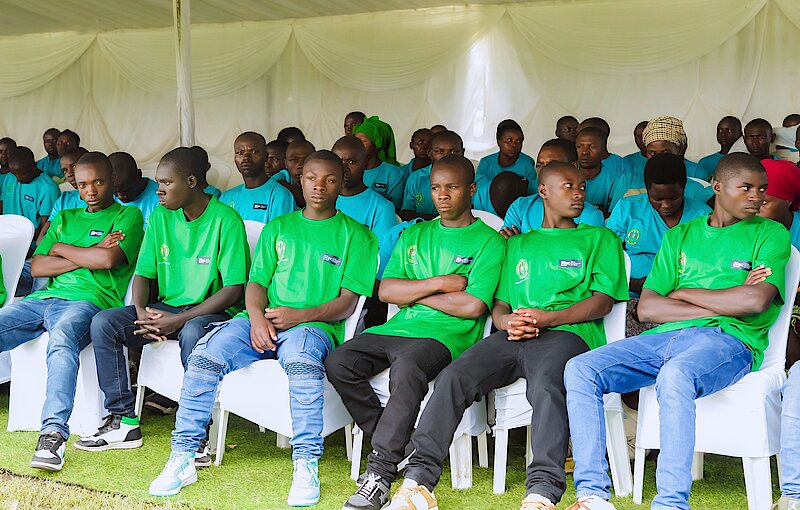
On 31 March 2026, at the Mutobo Demobilisation Centre, Rwanda Demobilisation and Reintegration Commission (RDRC) has officilally conducted a discharge ceremony for 214 former members of armed groups who took a decisive step away from conflict and towards a peaceful civilian future.
The ceremony, organised by the Rwanda Demobilisation and Reintegration Commission (RDRC), marked the official discharge of Phase 76, comprising 203 men and 11 women who have, over the past three months, undergone a comprehensive process of rehabilitation, reflection, and preparation for reintegration into society.
The group reflects the diverse profiles of those affected by armed conflict in the jungles of the Democratic Republic of Congo. Among the beneficiaries, 178 are former combatants, while 36 are civilians previously associated with armed groups. All have successfully completed the Pre-Discharge Orientation Programme (PDOP) and are now ready to transition fully into civilian life.
For many, this moment represents more than a formal discharge—it marks the beginning of a new chapter defined by dignity, opportunity, and renewed belonging.
Their journey to this point has been shaped through the PDOP, a carefully structured programme that goes beyond demobilisation. While at Mutobo, participants received psychosocial and medical support, civic education, and de-radicalisation guidance, alongside practical training in entrepreneurship and basic information technology. They were also supported in obtaining national identity documents, opening bank accounts, and reconnecting with their families—laying a solid foundation for sustainable reintegration.
As the ceremony unfolded, reintegration emerged not as an abstract policy, but as a lived and visible reality. A mini-exhibition set up within the centre showcased businesses established by previously reintegrated beneficiaries. Former combatants, once in similar circumstances, stood proudly beside their enterprises, presenting products and services that now contribute to local economic growth and community development.
These tangible success stories send a clear message—both nationally and across the region—that peaceful reintegration is achievable and impactful.
The event also highlighted the human dimension of this transformation. Through personal testimonies and a talent showcase, beneficiaries shared powerful accounts of resilience, reflection, and renewed purpose. Their voices spoke of lives redirected, hope restored, and futures reclaimed.
In a symbolic moment, each beneficiary received a discharge package, including a Demobilisation Card, National Identity Card, and a certificate in entrepreneurship, formally marking their transition from armed groups into civilian life.
Yet, this milestone is not the end of the journey.
Following the ceremony, the discharged individuals will return to their respective home districts across the country, where they will continue to benefit from coordinated support by RDRC and local authorities. A structured follow-up framework will ensure that their reintegration remains sustainable, inclusive, and responsive to their evolving needs.
Beyond the figures, this event reaffirms Rwanda’s broader vision: that lasting peace is built not only through security measures, but through human-centred approaches that restore dignity, rebuild trust, and create opportunity.
As Rwanda continues to champion non-military pathways to regional stability, the stories emerging from Mutobo today stand as a compelling reminder that even after conflict, transformation is possible—and peace can take root.
END.